

Core emotional concerns about separation agreements
Couples that want to separate have similar feelings about separation agreements:
Fear of signing something unfair
Many people worry about agreeing to terms they don't fully understand, or being pressured into an arrangement that favours their former partner. This is a legitimate concern, and it's exactly why full financial disclosure and having your own lawyer review the document are crucial. Financial disclosure is required by law, and in most provinces so is Independent Legal Advice.
Confusion about whether the document is "enough"
A separation agreement resolves the practical questions about parenting, property and support, but it does not end the marriage. Ending the marriage requires a separate legal process. You can live under separation terms for months before pursuing the divorce, which is entirely normal.
Anxiety about doing it wrong without a mediator or lawyer
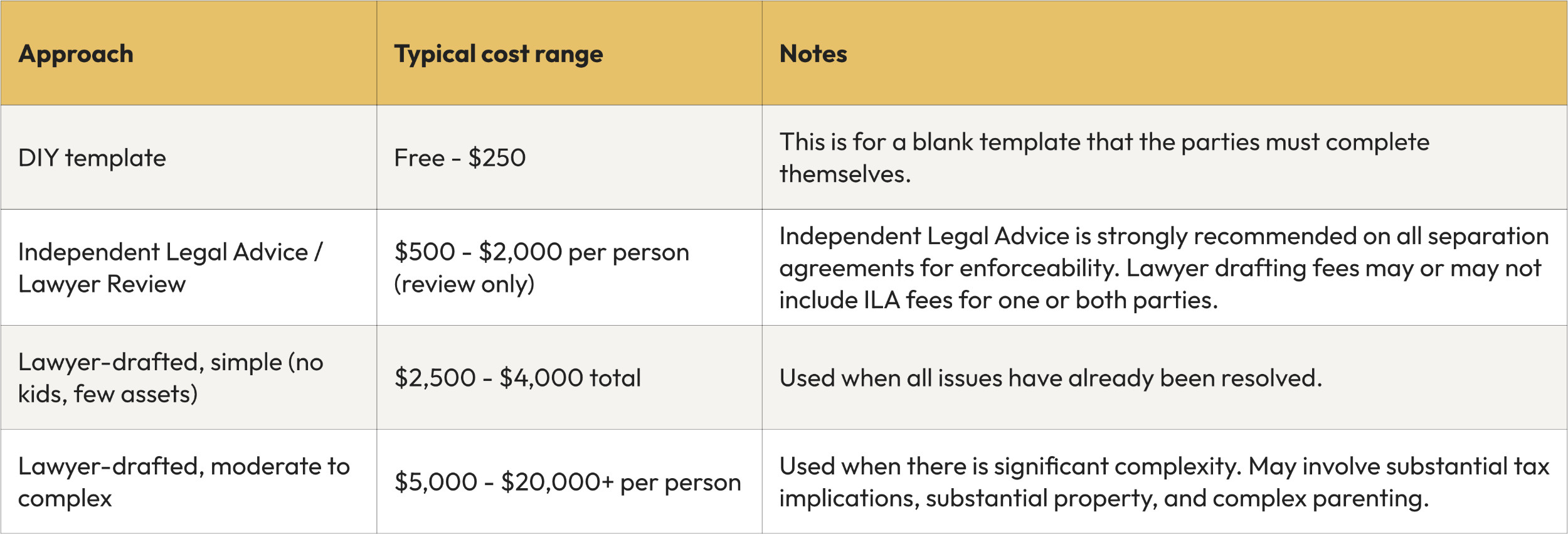
DIY contracts are legally possible, but they carry real risks. The concern about "getting it wrong" is well-founded, and this page explains where the risks concentrate and what a minimal investment in legal review can protect against.
Worry about being pressured into signing
A contract signed under pressure, without time to seek legal guidance, or based on incomplete financial information is at significant risk of being set aside by a court. You always have the right to say "I need time to consult a lawyer" before signing anything.
Separation vs. divorce: The key difference
Legal separation is when two spouses decide to live "separate and apart" with the intention of ending the relationship. In Canada, it requires no court process, no paperwork, and no formal declaration. It happens the moment the decision is made. Spouses can be legally separated while still living under the same roof. Courts recognise situations where couples maintain separate lives within the same home due to financial necessity.
The most common ground for divorce in Canada is one year of living "separate and apart." This period can run while the written arrangement is being negotiated: you do not need to wait until the document is signed before the clock starts.
Divorce is the formal legal termination of a marriage by a court order under the federal Divorce Act. It requires an application to the court, satisfaction of at least one ground for divorce (almost always one year of living apart), and a waiting period of 31 days after the divorce order before it becomes final. Once divorced, both parties can legally remarry.
The relationship between the two is often sequential: couples separate, then negotiate and sign a written contract to govern how they live apart. After the one-year period they can then use it as the foundation for an uncontested divorce application. Many people remain in a legal separation indefinitely without pursuing a formal divorce, particularly if neither intends to remarry and the terms of the existing document adequately govern their arrangements.